
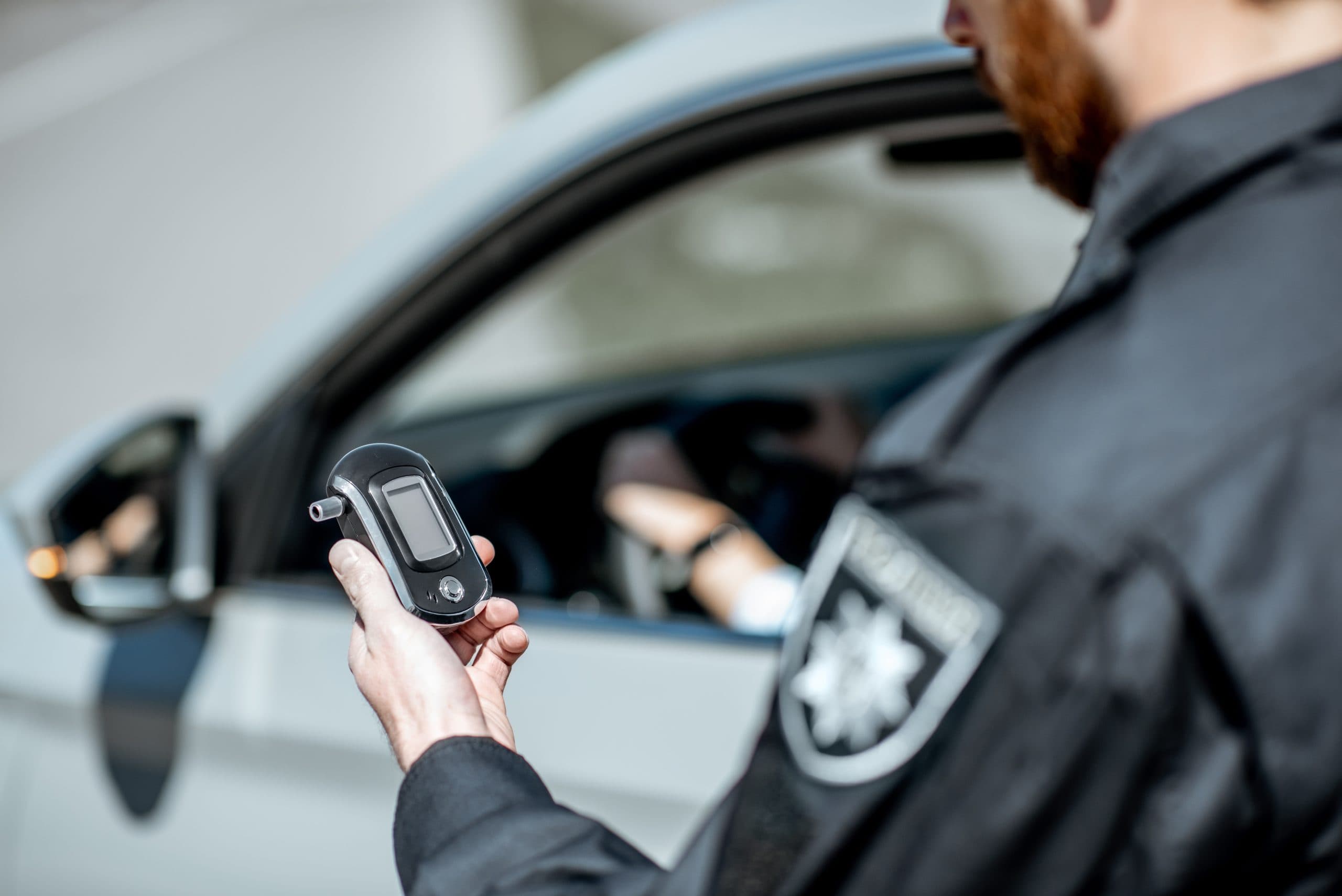
The gap between suspicion and evidence.
Without a reliable screening tool, officers rely on visual observation that varies between individuals and situations. In Sweden, 25% of people taken to a station for further drug testing turn out not to be impaired at all — time, resources and credibility spent on the wrong cases.
Drug impairment screening, built for the roadside
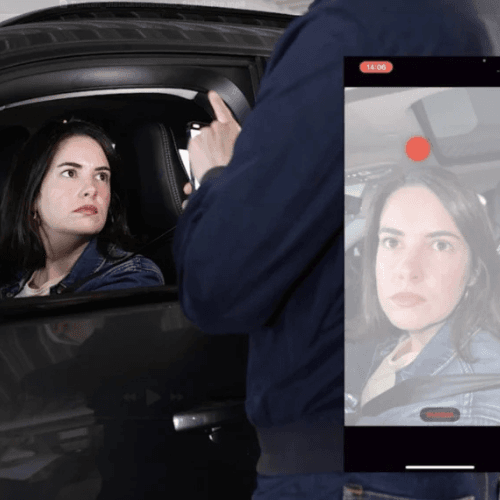
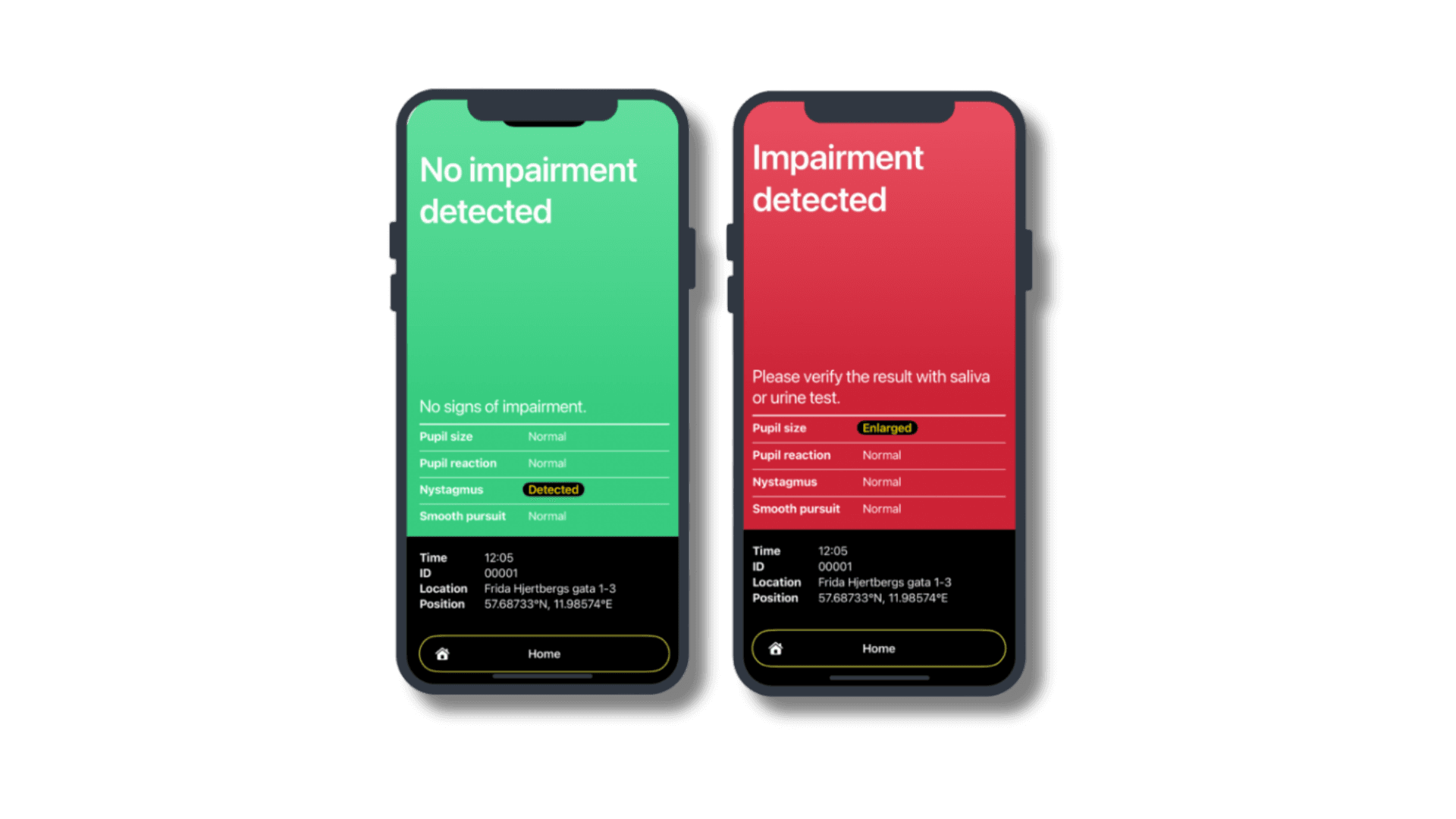
A short scan on a standard service phone captures facial and ocular signals — the involuntary eye movements and pupil responses that drugs reliably alter and that can’t be masked — and analyzes them on-device. The officer gets a clear, standardized result in about 15 seconds, without disrupting the stop, and can decide whether the case needs further testing.
Key Features

Rapid results
Assessment ready in about 15 seconds, down from screening that can take up to an hour — without disrupting the stop.
Objective and consistent
AI-based analysis standardizes assessment across officers and situations, reducing subjectivity and human error.
Non-invasive
Facial and ocular data only. No swabs, no samples, no physical contact.
Mobile and scalable
Runs on any standard service phone, as a standalone app or an SDK that integrates into existing police systems.
Private by design
All data processed on-device, in line with GDPR and policing digital standards. No images stored, no biometric data retained.
Broad detection
Screens across cannabinoids, central stimulants, CNS depressants and opioids.
Proven impact




15s
Screening time, down from up to an hour
97.2%
Detection accuracy at 0.8‰ BAC+
Zero
Biological samples required
Ethics and Compliance
Trusted by European police, SighticPro is built to strict ethical and regulatory standards, including GDPR and ISO 27001 and 9001. The underlying data and models are developed under independent ethical approval, with transparency, participant safety and privacy at every step. As a screening tool, it supports an officer’s decision, and it doesn’t replace evidential testing.
Talk to us about screening for your unit. We’ll help you find the right way to bring objective drug screening into the field — as a standalone app or integrated into your existing systems.
Law Enforcement & Government FAQ
An officer runs the screening on a standard service phone: the driver looks at the camera for a short scan that captures eye movements and pupil response — the involuntary signals that drugs reliably alter and that can’t be masked. The analysis happens on-device and returns an objective, standardized result in about 15 seconds, without extending the stop. The officer uses that result to decide whether the case warrants further testing.
No — it’s a screening tool that makes the early decision faster and more consistent. Traditionally, deciding whether to pursue a drug case rests on subjective visual assessment that varies between officers; the screening replaces that guesswork with a standardized, objective read. It supports the officer’s judgment and the existing process rather than removing the role of trained assessment or evidential testing.
A positive result gives the officer objective grounds to proceed to confirmatory testing, such as a blood analysis, under the normal legal process. Because the screen is fast and non-invasive, it helps focus that follow-up on the right cases — in Sweden, a quarter of people taken in for further drug testing turn out not to be impaired, and better screening reduces that wasted time and cost.
Yes. It runs on any standard service phone as a standalone app, or as an SDK that integrates into existing police systems and workflows, so a unit can adopt it without new hardware. All data is processed on-device in line with GDPR and policing digital standards — no images stored, no biometric data retained.