
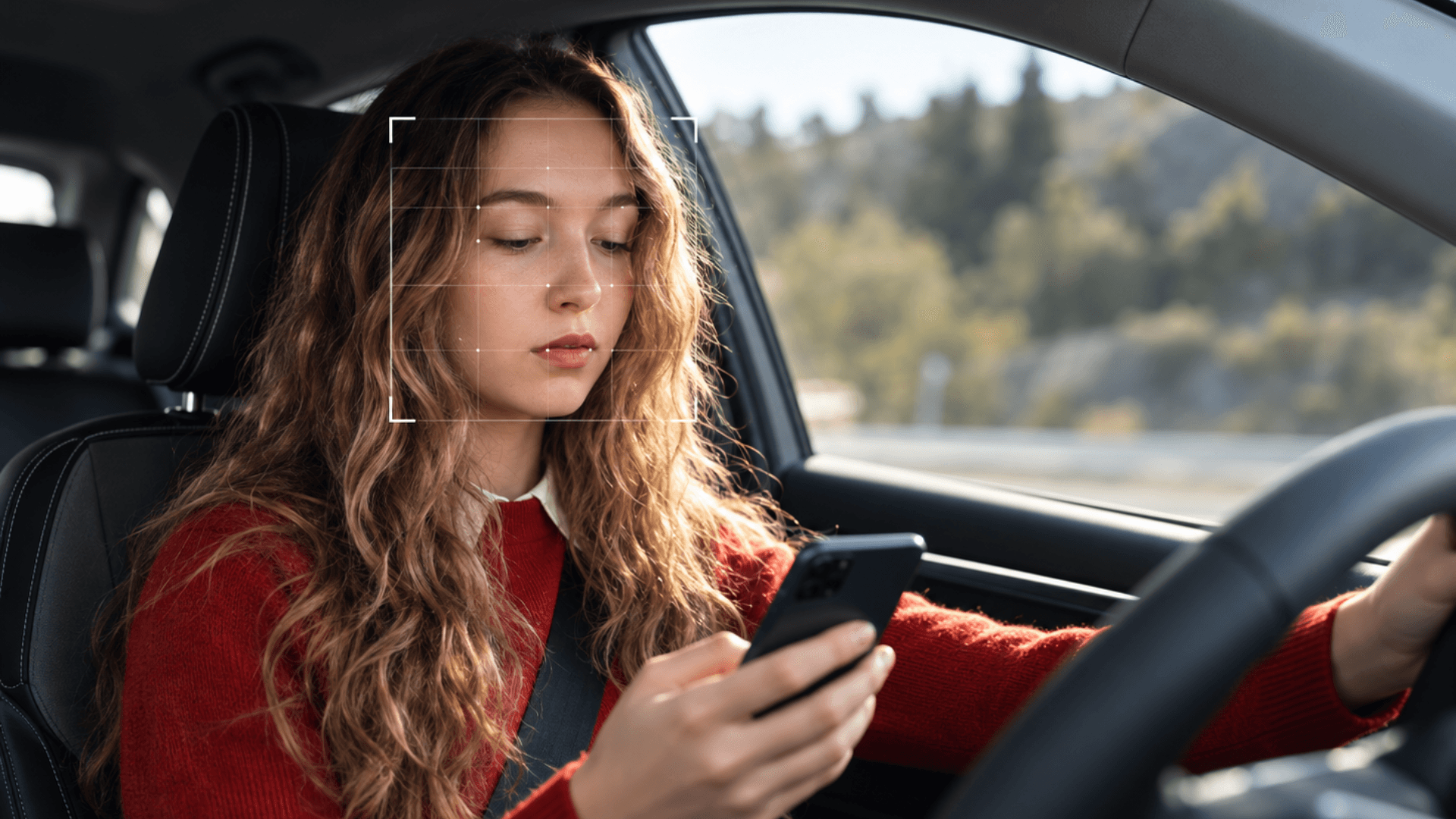
How it works
A Driver Monitoring System uses an infrared camera and AI to track the driver’s eyes, head, and gaze, detecting inattention or drowsiness. It can prompt the driver to refocus or support the vehicle in stopping safely. Built on Human Insight AI and real-world automotive data, it performs reliably across lighting conditions, hardware, and vehicle types.
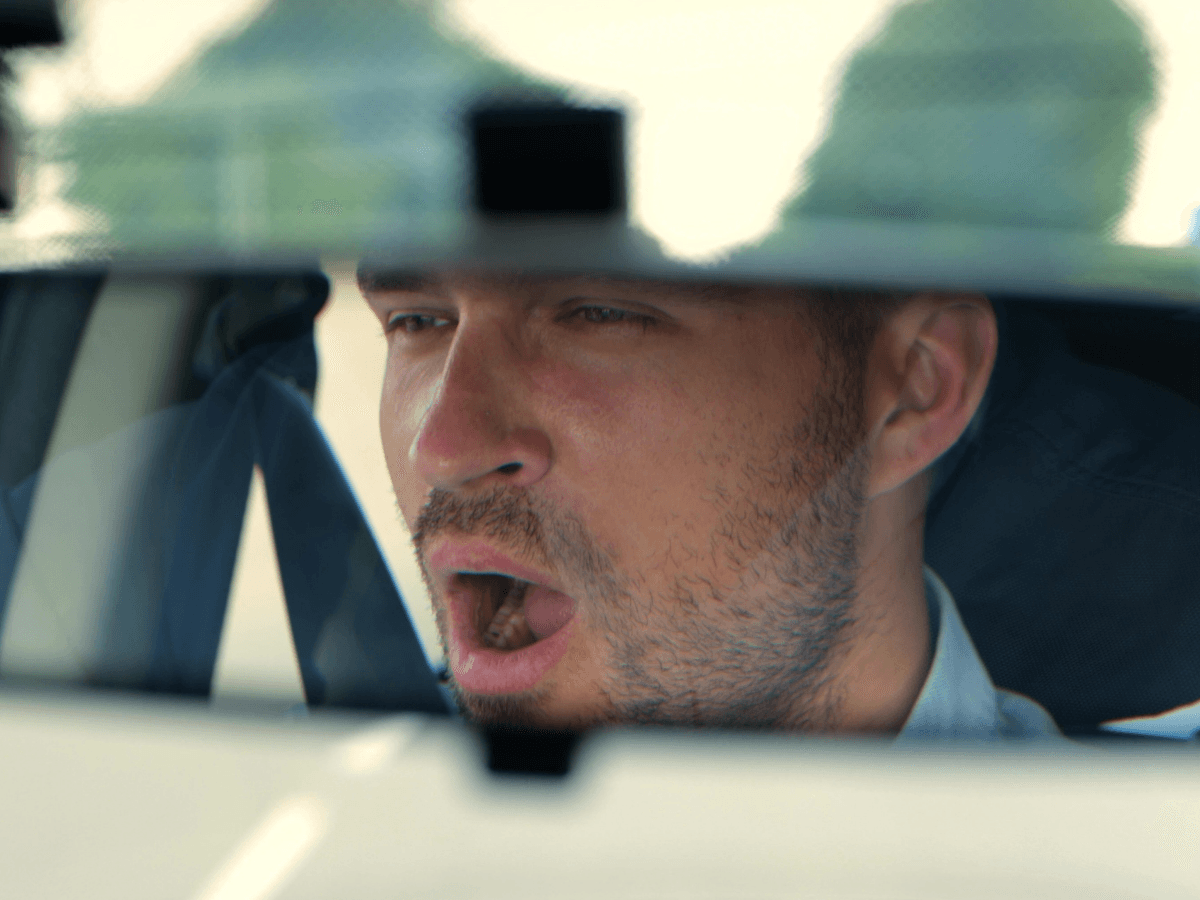
What it detects
Our AI-based DMS offers a range of features to enhance driver safety and personalize experiences.
Tracks gaze and head position to flag long or repeated glances away from the road, so the system can step in before a missed glance becomes a real risk.
Tracks eye closure, blinking and head position to pick up the earliest signs of fatigue, through to microsleep.
Powered by Sightic, detects signs of alcohol and drug impairment in real time from the driver’s eyes, using the existing in-cabin camera.
Recognizes the driver to personalize the car, and uses iris authentication to verify identity for in-car payments, theft deterrence and parental controls.
Recognizes what the driver is doing and holding, from phone use to eating, drinking or smoking.
Tracks how the driver is sitting and moving, including whether their hands are on the steering wheel.
Powered by Affectiva, reads the driver’s mood, emotions and reactions in real time.
Draws on posture and eye, head and face movement to help indicate the driver’s state.
Built for embedded deployment
Automotive safety leaves no room for compromise. Built on Human Insight AI technology and real-world automotive data, our software runs on-device and performs reliably across lighting conditions, hardware, and vehicle types. The SDK is the standardized entry point for technical teams to evaluate, integrate, and deploy it.
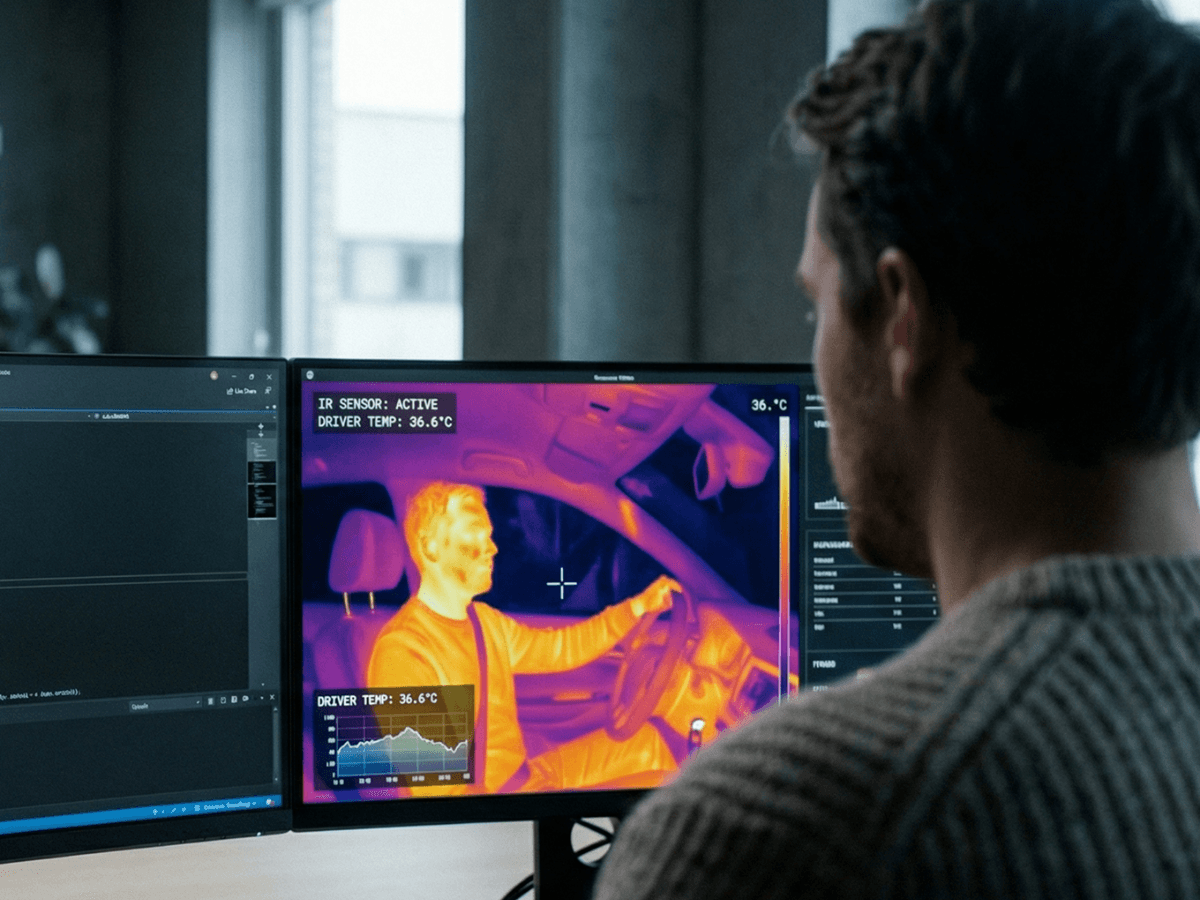
The regulatory landscape
Every 24 seconds, a life is lost in traffic, with distraction or fatigue behind most accidents. The US, EU, and China are introducing requirements to address these risks. Our software already meets Euro NCAP, the EU General Safety Regulation (GSR), and China’s GB/T driver monitoring standards.
Learn what Euro NCAP’s assessment protocol means for new car models, and what it takes to earn a five-star rating in our e-book.
Built on proven technology
6M+
cars on the road
24
OEMs
CES 2026
Innovation Awards Honoree for Alcohol Impairment Detection
Explore more in automotive
Talk to our automotive team about integrating human understanding into your next vehicle program.
Driver Monitoring System FAQ
Our driver monitoring software is hardware-agnostic and built to automotive standards — developed to ASIL quality following Automotive SPICE processes — so it integrates into an OEM or Tier 1 platform rather than requiring dedicated hardware. It runs embedded, on-device, on limited in-vehicle compute, and we work with engineering teams from evaluation through to production, with the SDK as the standardized entry point.
Yes. The software runs directly on in-vehicle hardware with no cloud dependency, and is engineered for a small compute footprint so it fits within the constraints of production hardware. It performs reliably across lighting conditions, cameras and vehicle types.
It works with an in-car camera and infrared illumination, and because it’s hardware-agnostic, it supports flexible camera placement and a range of sensors — so it can be designed into different cabins and platforms rather than dictating the hardware.
Yes. We develop to ASIL quality standards and follow Automotive SPICE processes, in close collaboration with the automotive industry — because driver monitoring is a safety system where there’s no room for error.
Our driver monitoring software meets Euro NCAP, the EU General Safety Regulation (GSR) and China’s GB/T standards for driver monitoring, and we take part in the expert groups shaping these protocols. A program building on our DMS is positioned for the ratings and requirements that increasingly apply to new vehicles.
Driver monitoring focuses on the driver’s state and behavior; a cabin monitoring system (CMS) extends that core technology to all occupants. Together, they make up interior sensing, so a program can start with driver monitoring and expand to the full cabin on the same foundation.