
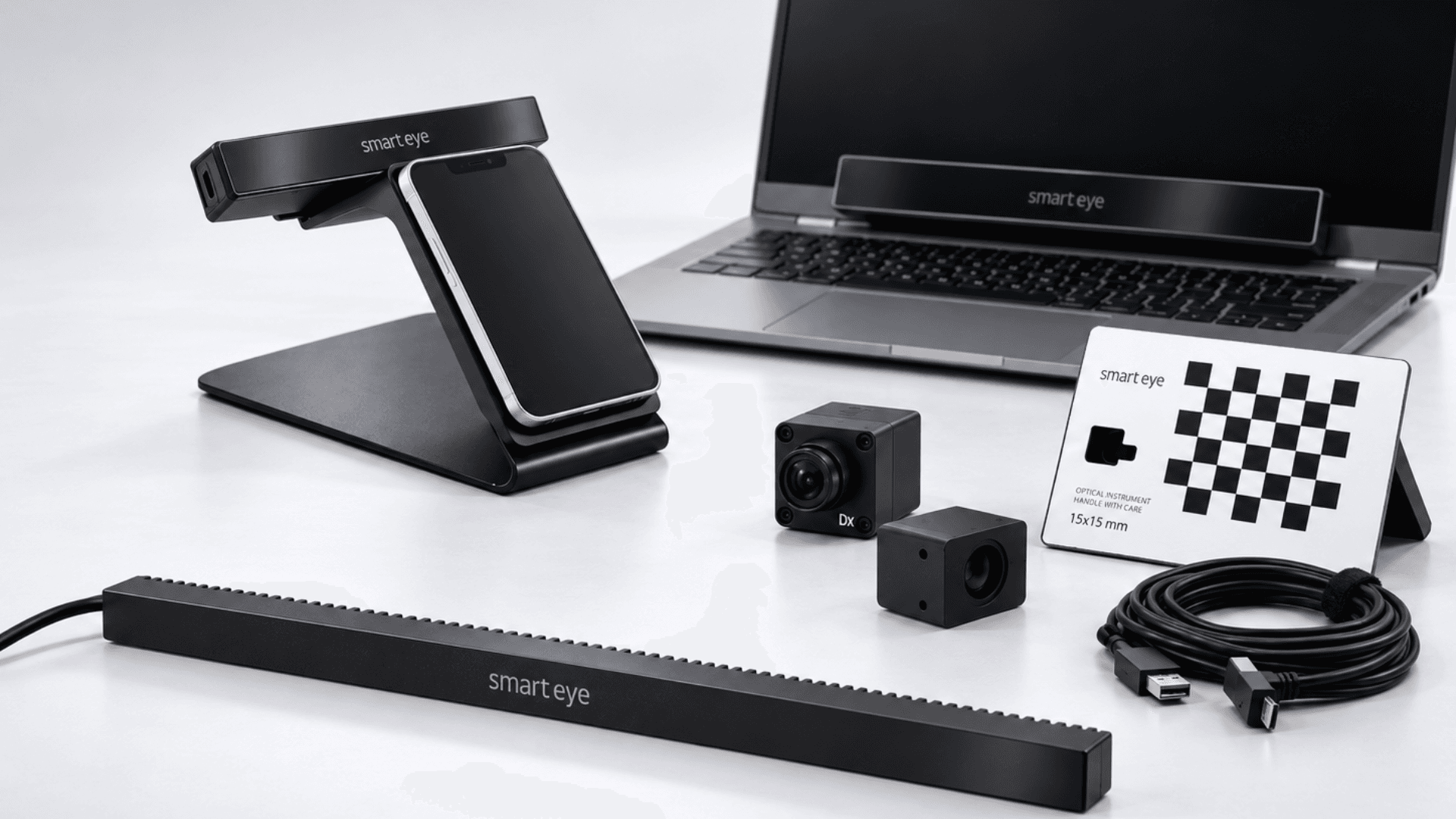
Find the right system for your environment
Built on more than 25 years of eye tracking work, the same systems run in university labs, flight and driving simulators, instrumented vehicles and control rooms, and connect to the analysis tools researchers already use, including the iMotions platform.
Smart Eye Pro
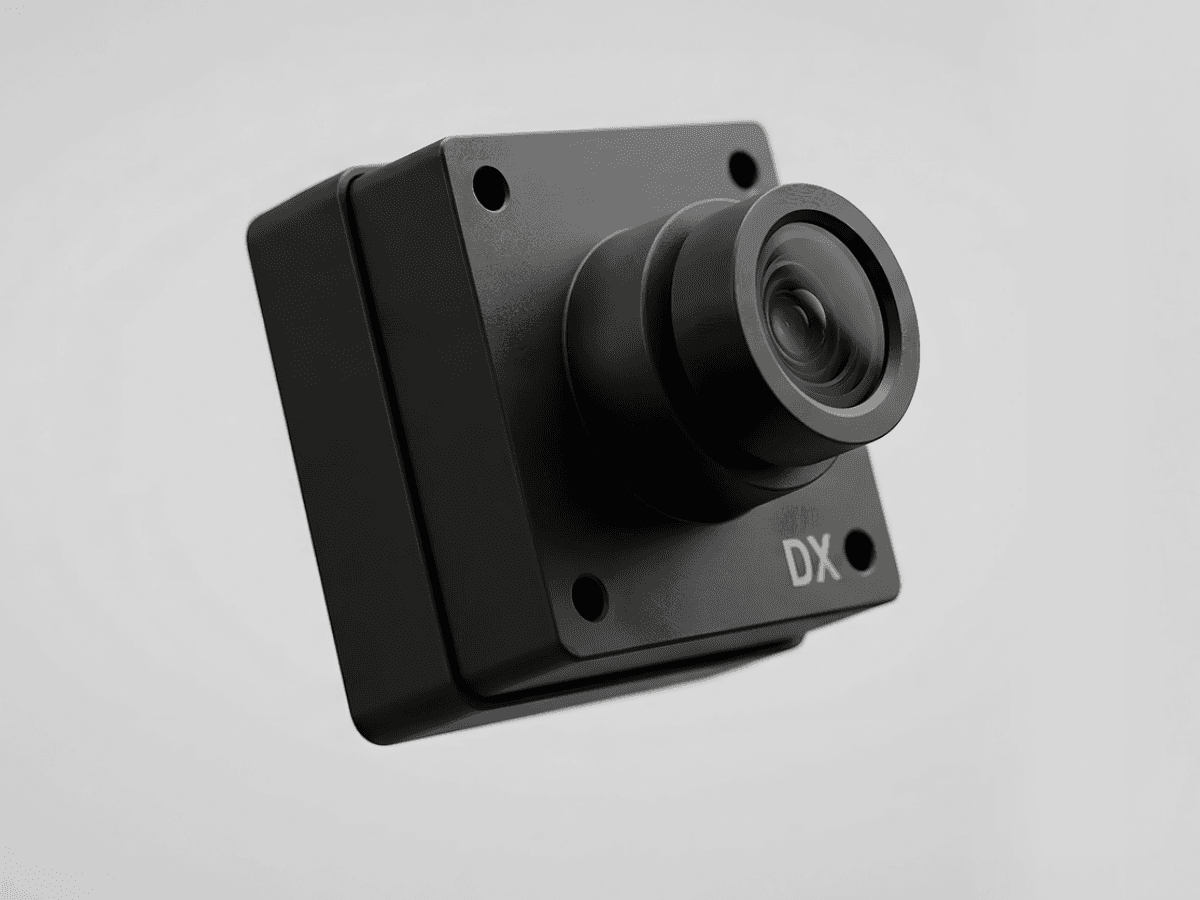
Smart Eye Pro is our most advanced remote eye tracker, a multi-camera system built for complex environments. Using 2 to 8 cameras placed freely around the participant, it tracks head and eyes through a full 360 degrees. Each system is configured to its environment, from a driving simulator to a control room.
- HMI research
- Pilot training
- ATC training
- Aviation human factors
- 2 to 8 cameras for 360° head and eye tracking
- Compact cameras that fit into cockpits and dashboards without getting in the way
- Large head box, so tracking holds when participants move freely
- 3D world model that makes post-processing faster and simpler
- Active IR illumination that makes tracking independent of ambient light
| Specification | Smart Eye Pro |
|---|---|
| Cameras | 2 to 8, placed freely to suit the setup |
| Sampling rate | 60 and 120 Hz |
| Field of view | 90° to 360°, depending on number of cameras |
| Gaze accuracy | 0.5° under ideal conditions; 5° calibration-free |
| Head accuracy | Position ±5 mm, rotation 1.5° (ideal conditions) |
| Gaze calibration | Flexible number of calibration points, or calibration-free |
| Output data | Head orientation (6DOF), eye position, gaze, pupil diameter, saccades, fixations, blinks, eyelid opening; left and right eye, with quality values |
| Real-time streaming | About 20 ms delay at 60 Hz, 12 ms at 120 Hz, from camera exposure |
| 3D World Model | Reports which object, and where on it, the participant is looking |
| Illumination | Active IR at 850 nm, independent of ambient light |
| Eyewear | Glasses, contact lenses and non-IR-blocking sunglasses |
| Optional modules | CAN output, facial features, speaking detection, tracking while recording, toddler tracking, drowsiness (KSS), Profile ID, emotions, camera stream, GPS, Laser Chessboard Tool |
MicroBird
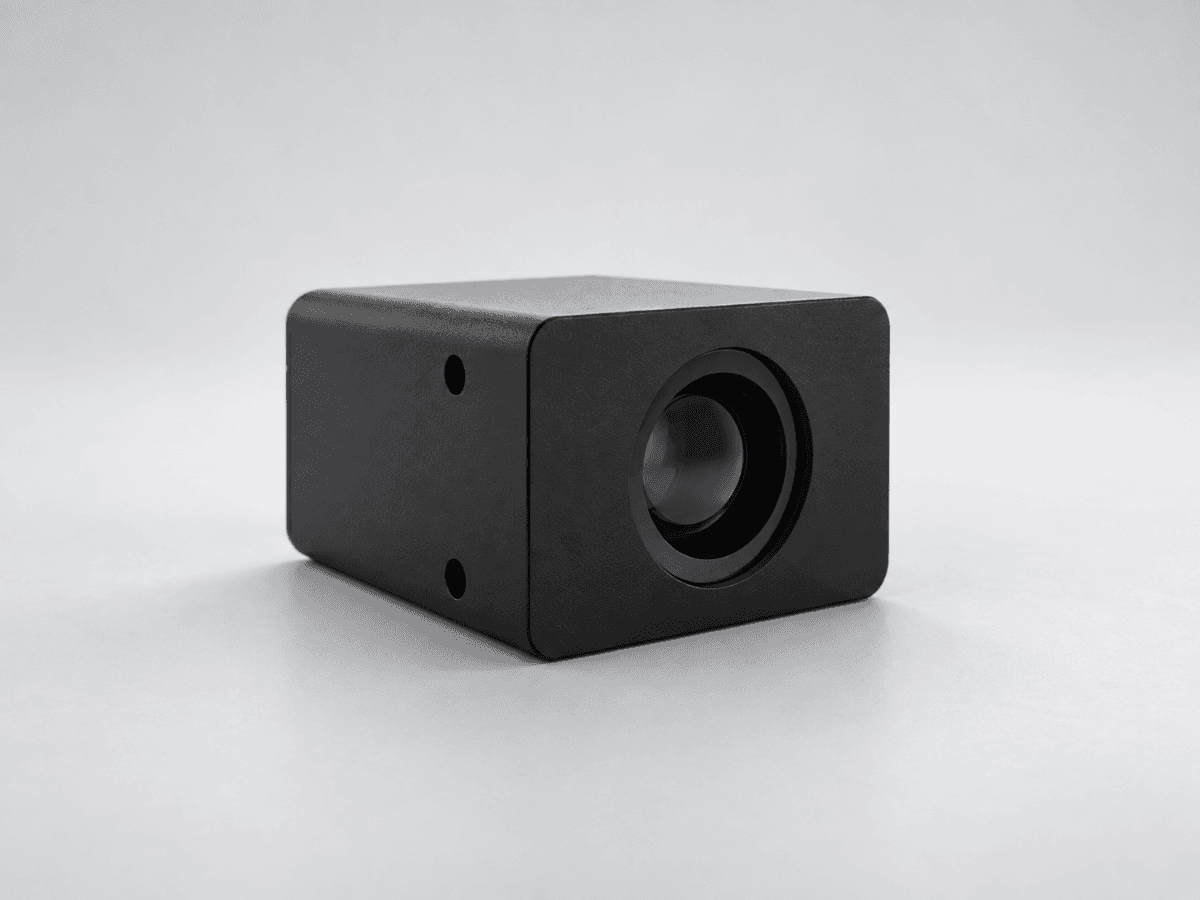
MicroBird is a cockpit eye tracking system built for pilot training. Its cameras fit into cramped cockpits and simulators, with a visible footprint of 5 mm when mounted behind a panel. They capture gaze and facial data with nothing worn, so trainees fly as they normally would. MicroBird integrates into training platforms from multiple partners, and we work with training providers to bring it into new ones.
- Pilot training
- Air traffic control training
- Competency assessment
- Instrument scan training
- Integration into simulators and training platforms
- Very small footprint that fits into cramped cockpits and consoles
- Non-intrusive: cameras mounted in the workspace, nothing worn
- Gaze mapped to individual instruments through custom cockpit models
- Works with prescription glasses, which VR headsets and eye tracking glasses often struggle with
- Built for integration into simulator and training platforms
| Specification | MicroBird |
|---|---|
| Configurations | Single pilot, or pilot and co-pilot |
| Sampling rate | 60 Hz |
| Camera size | 13 × 20 × 21 mm |
| Visible footprint | 5 mm diameter when mounted behind a panel |
| IR flash size | 13 × 24 × 36 mm |
| Illumination | Active IR at 940 nm, independent of ambient light |
| Gaze accuracy | 2° precision gaze; 5° calibration-free (typical) |
| Head accuracy | Position ±5 mm horizontal and vertical, ±5 cm depth; rotation 2° (typical) |
| Gaze field of view | Precision gaze: ±20° horizontal, +25°/−10° vertical. Calibration-free: ±75° horizontal, +45°/−30° vertical |
| Output data | Head pose, eye gaze, eye position, pupil size, blinks |
| Eyewear | Glasses, contact lenses, non-IR-blocking sunglasses and visors |
| Other features | Automatic pilot profile switching |
Aurora
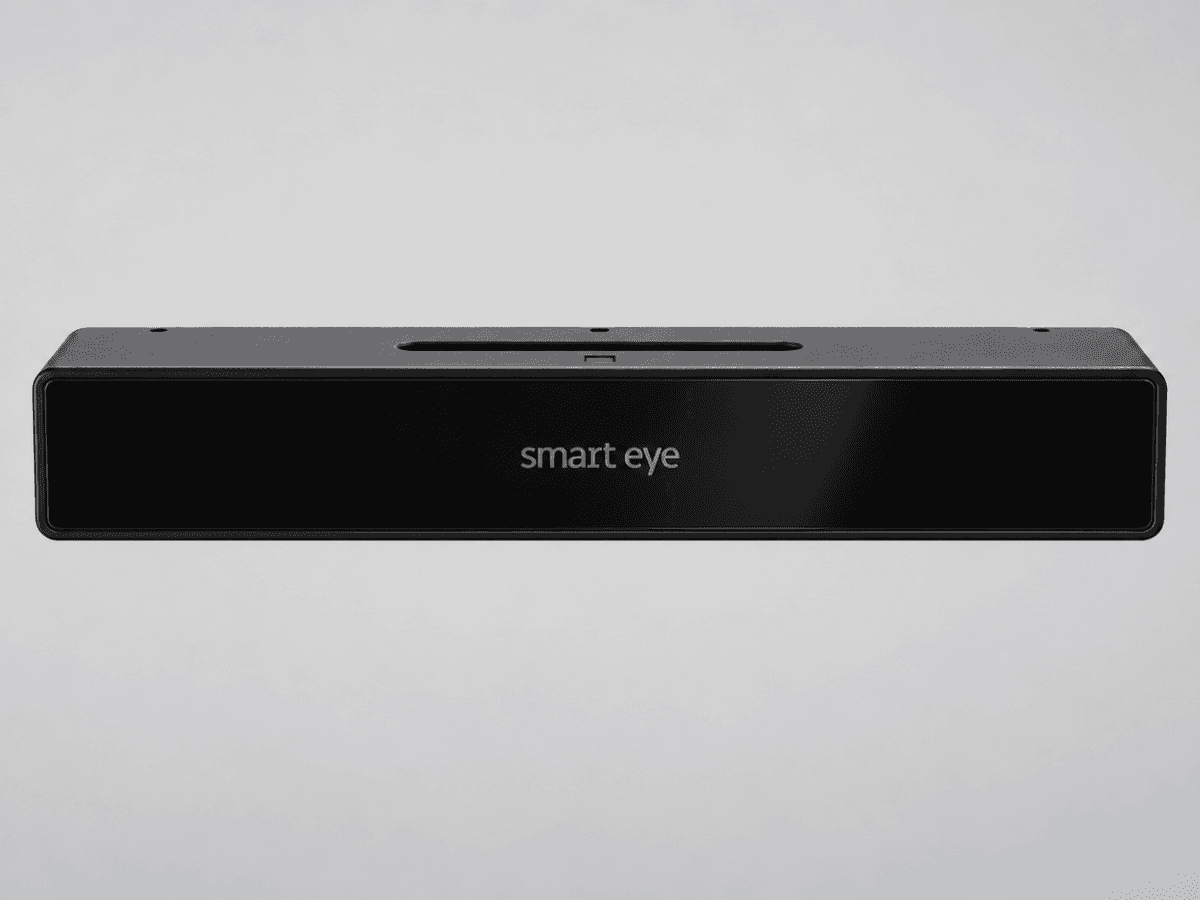
Aurora is our smallest screen-based remote eye tracker, a compact system built for multimodal research. It moves easily between projects, screens and setups, and two high-definition sensors capture participants reliably across lighting conditions. Aurora works as part of a larger sensor setup through iMotions and E-Prime 3, or on its own as XO, running Smart Eye Pro software.
- Cognitive research
- Multimodal research
- UX & mobile research
- Clinical research
- Our smallest remote eye tracker
- 60, 120 or 250 Hz
- Aurora Expansion Box timestamps 8-bit markers within 20 µs of the eye tracking data
- Integrates with iMotions and E-Prime 3
| Specification | Aurora |
|---|---|
| Sampling rate | 60, 120 and 250 Hz |
| Accuracy | 0.3° (typical) |
| Precision | 0.1° (typical) |
| Output data | Gaze origin, gaze point, pupil diameter, eyelid opening, head position and rotation, camera and real-time time stamps; binocular, with quality index |
| Gaze calibration | Both eyes or single eye |
| Time stamp precision | 1 µs |
| Synchronization | 8-bit markers through the Aurora Expansion Box |
| Maximum screen size | 24″ (16:9) |
| Operating environment | Indoors, all lighting conditions |
| Mounting | On-screen, mounting plate included |
| Integrations | iMotions, E-Prime 3 |
| Aurora Expansion Box | 8-bit word markers via D-Sub DB9; 22 µs from signal change to time stamp; powered by the eye tracker; works with Chronos (PST) and StimTracker (Cedrus) |
| Accessories | Extended USB-C cable; Mobile Stand (phones up to 7″, portrait, screen capture up to 1080p at 60 fps); Tripod Accessory Kit for large screens and projectors |
AI-X
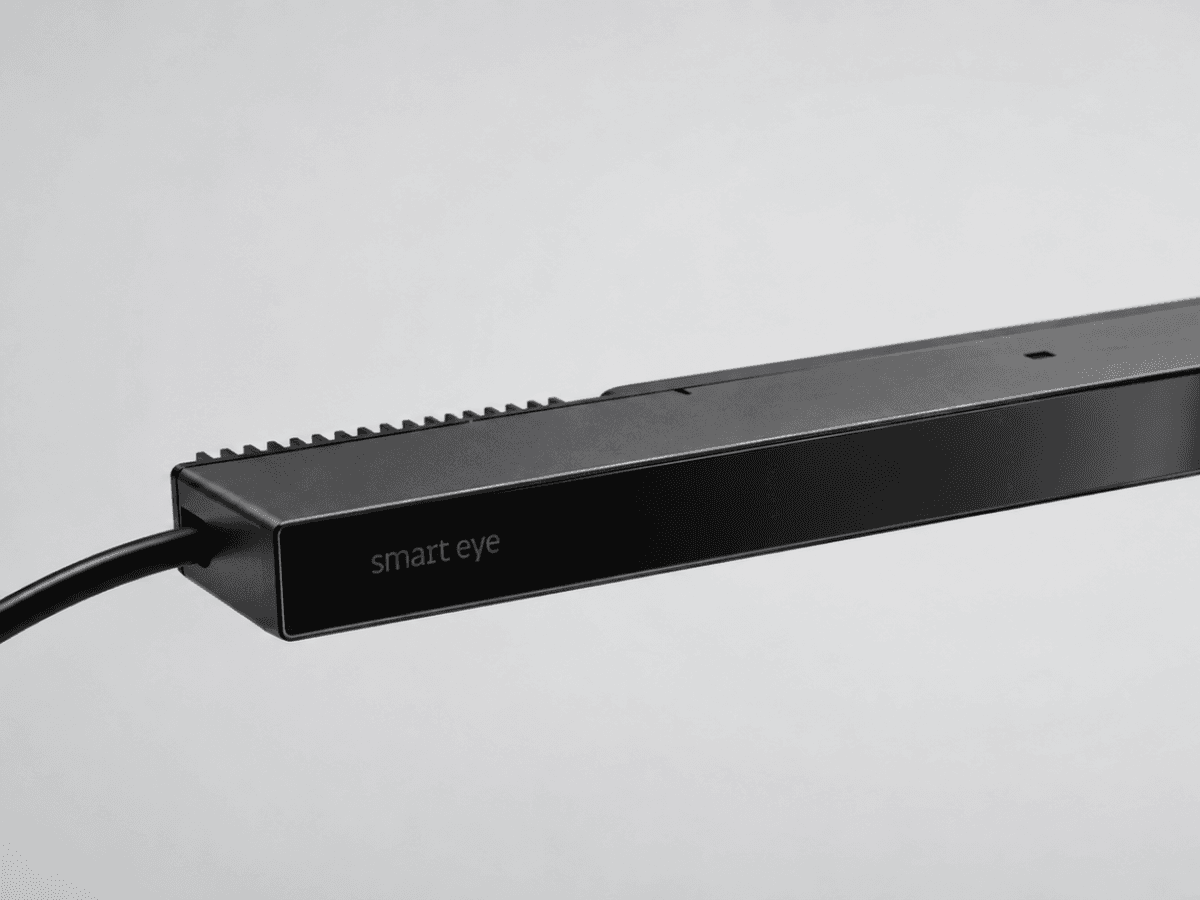
AI-X is a compact screen-based eye tracker built for studies at scale. A single high-definition sensor captures participants at 60 Hz on displays up to 24 inches, regardless of lighting. AI-X attaches to a laptop, so the study can go to where participants are, and a magnetic bracket makes it quick to move between screens.
- Ad testing
- UX research
- Psychology studies
- Mobile app testing
- Compact eye tracker for screens up to 24″
- Designed for large studies with many participants
- Runs from a laptop for portable studies
| Specification | AI-X |
|---|---|
| Sensor | One high-definition sensor |
| Sampling rate | 60 Hz |
| Gaze accuracy | 0.5° (typical) |
| Precision | 0.1° (typical) |
| Head box | 35 × 30 cm at 65 cm |
| Operating distance | 45–85 cm |
| Output data | Gaze point, pupil diameter, time stamp; binocular, with quality index |
| Maximum screen size | 24″ (16:9) |
| Size and weight | 268 × 13 × 32 mm, 147 g |
| Software | Smart Eye Tracker, available through the iMotions help center |
| Accessories | Mobile Stand (phones up to 7″, portrait, screen capture up to 1080p at 60 fps); Tripod Accessory Kit for large screens and projectors |
XO
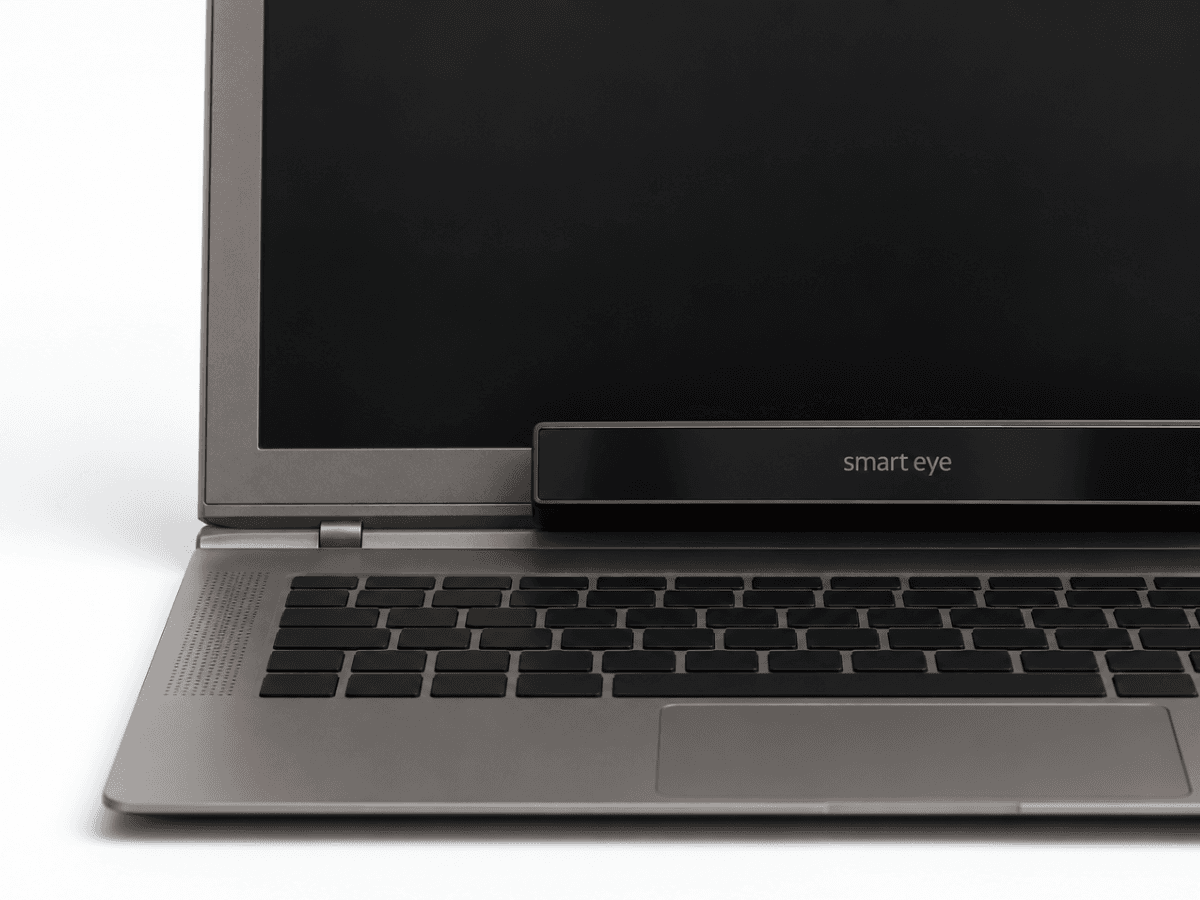
XO is our dual-camera eye tracker for studies beyond the screen. It runs Smart Eye Pro software on the same compact hardware as Aurora, tracks in 3D environments and across multiple areas of interest, and sends its data to the analysis or visualization tool of your choice.
- Driver behavior research
- Simulator training
- Usability research
- Shopper & product research
- True dual-camera design running Smart Eye Pro software
- Tracks in 3D environments and across multiple areas of interest
- 60 Hz, upgradable to 250 Hz
| Specification | XO |
|---|---|
| Cameras | True dual camera (Aurora camera hardware) |
| Software | Smart Eye Pro |
| Sampling rate | 60, 120 and 250 Hz |
| Operating distance | 50–80 cm |
| Head box | 50 × 40 cm |
| Gaze accuracy | Gaze 0.5°, head rotation 1.5° (ideal conditions) |
| Output data | Head orientation (6DOF), eye position, gaze, pupil diameter, saccades, fixations, blinks, eyelid opening; left and right eye |
| World model | User-definable |
| Mounting | Magnetic screen bracket, or 3-DOF mount for any surface |
| Integration | API for remote control; SDK with documentation and examples |
Software, analysis & integration
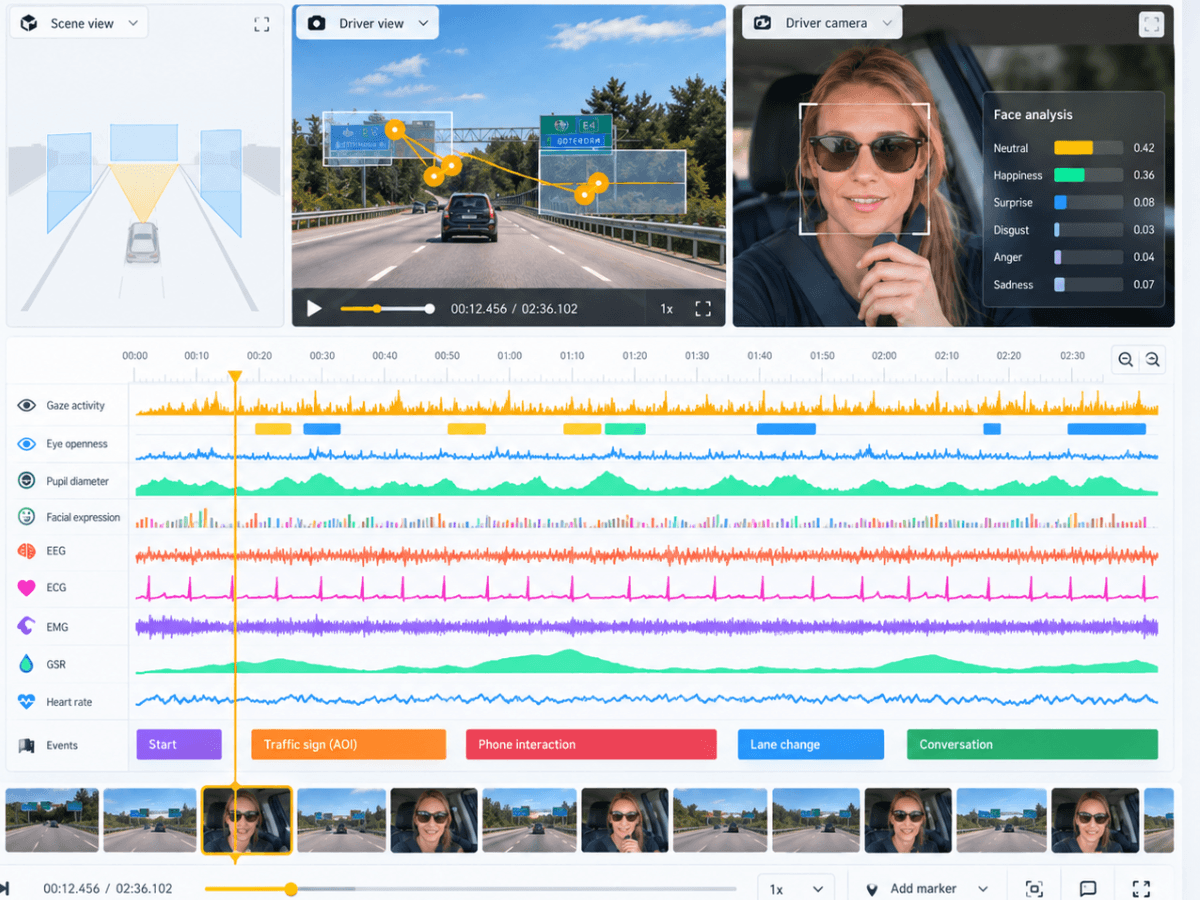
Our analysis tools take you from raw gaze data to usable results. Software from Smart Eye and our partners combines eye tracking with scene-camera, screen-grab, physiological and simulator data, and exports it to the platform you already use. For multimodal studies, iMotions synchronizes eye tracking with EEG, facial expression analysis and other biosensors in one environment.
Tell us about your study. Our research team will match a system to it and set up a demo.