
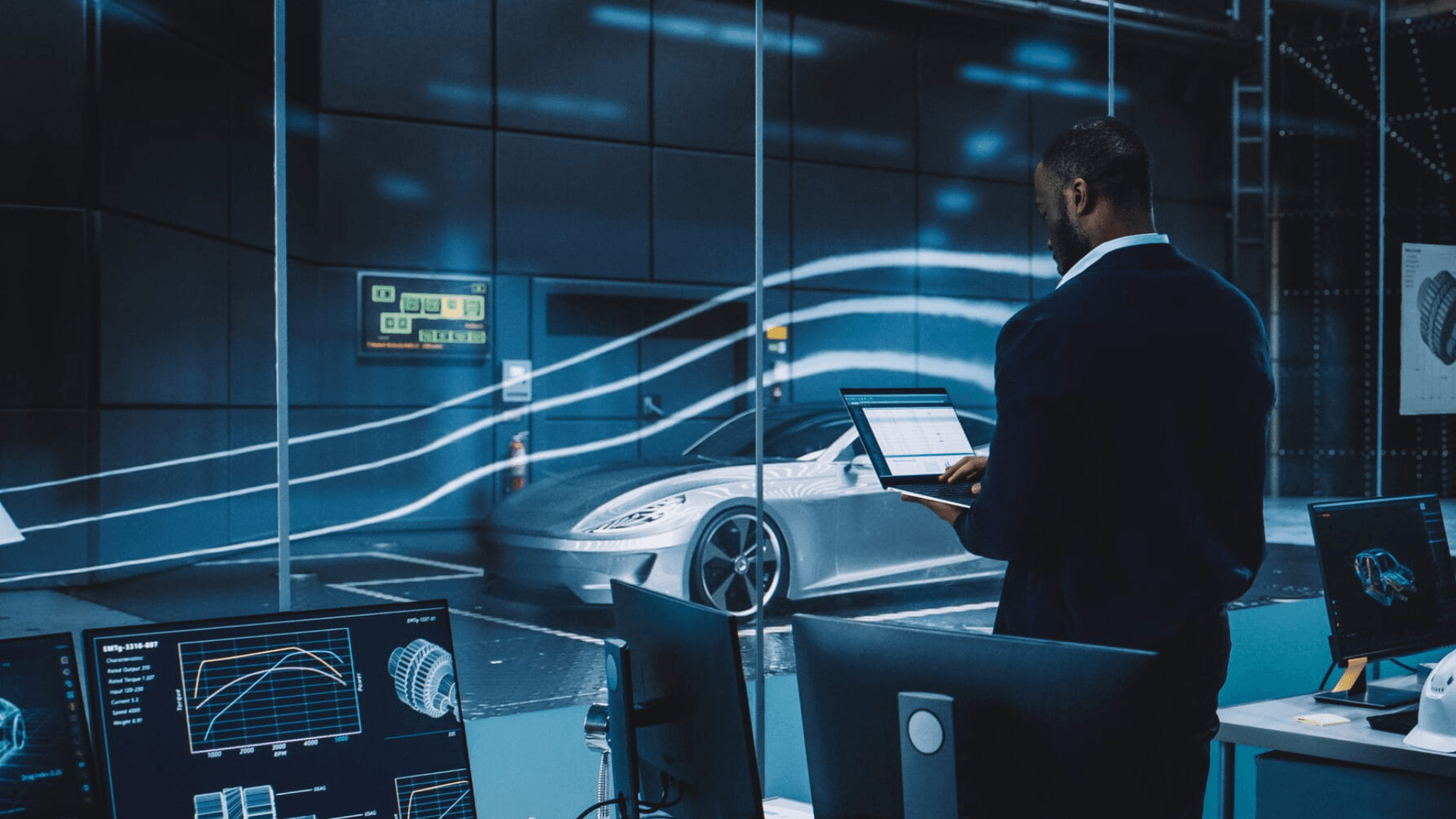
Smart Eye’s research department works across every business area, from early concepts through system integration, validation, and support.
New features
Develops the technologies behind both near-term products and long-term innovation.
Standards and regulation
Advises regulators and helps shape legislation, standards and test protocols.
Hardware partnerships
Integrates optical sensors and systems-on-chip (SoCs) with hardware partners.
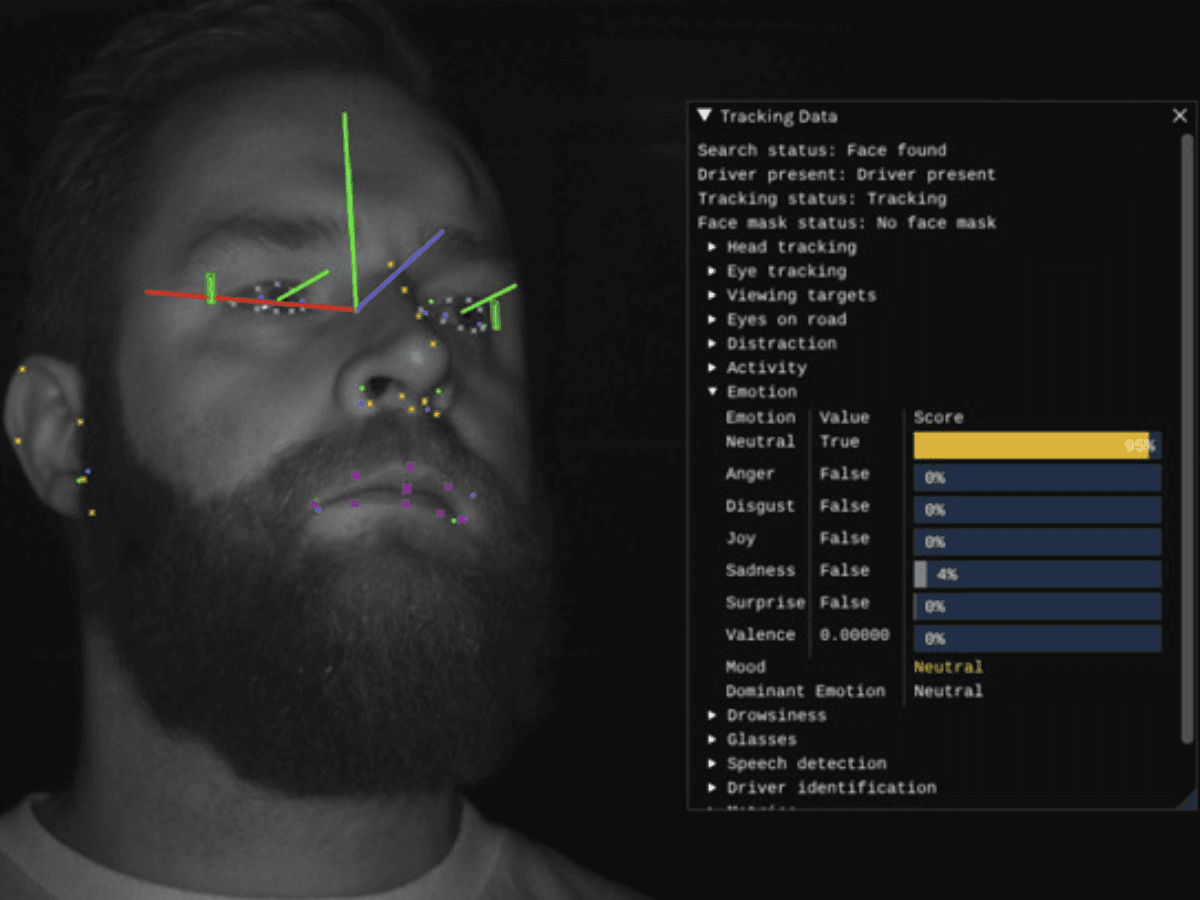
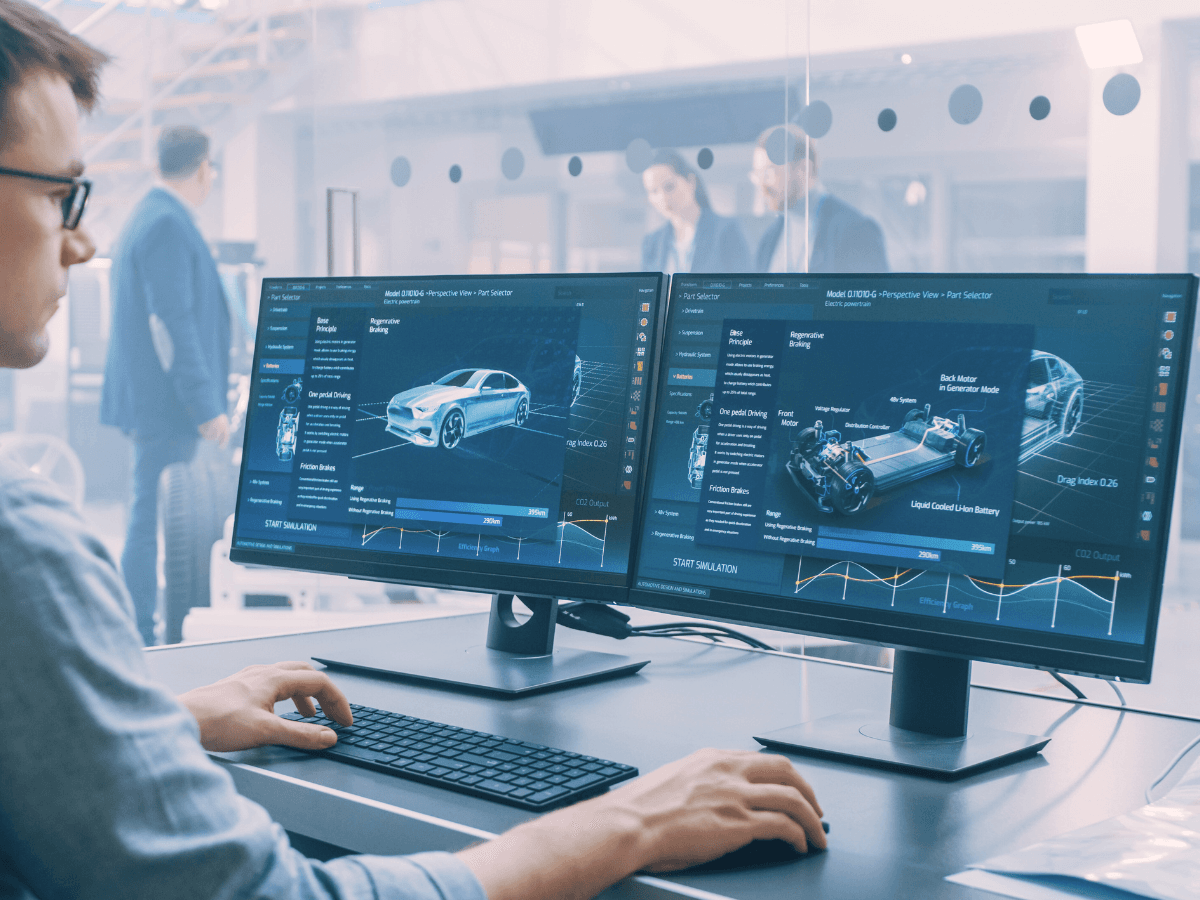
Data
Generates and refines datasets, including synthetic data, for development and customers.
From research to product
Research that has become new capabilities in Smart Eye’s automotive software.
Alcohol impairment detection
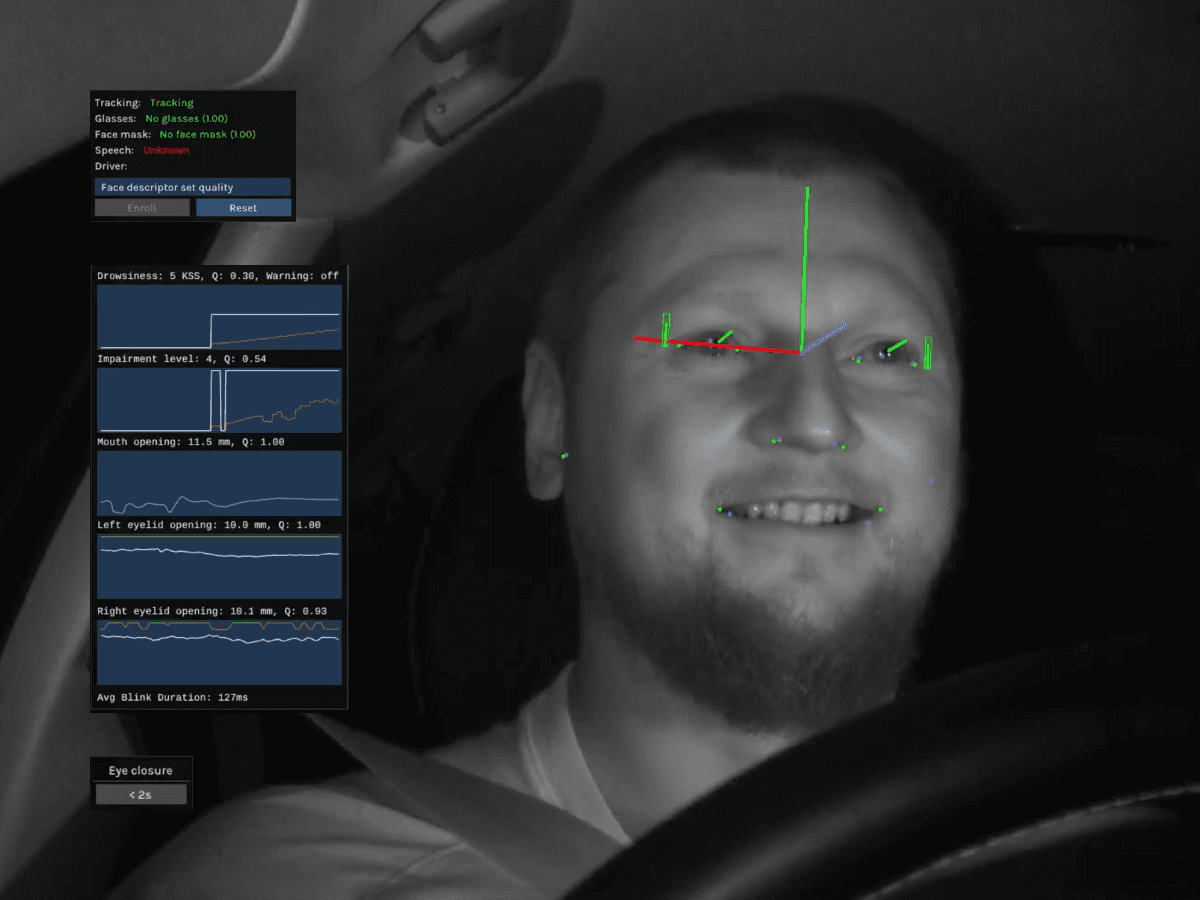
Alcohol impairment remains one of the most persistent causes of serious traffic accidents. Smart Eye’s alcohol impairment detection, a CES 2026 Innovation Awards Honoree, runs in our driver monitoring software and reads eye and eyelid movement through the vehicle’s existing cameras. It needs no extra sensors or calibration, and processing stays inside the vehicle.
Iris authentication
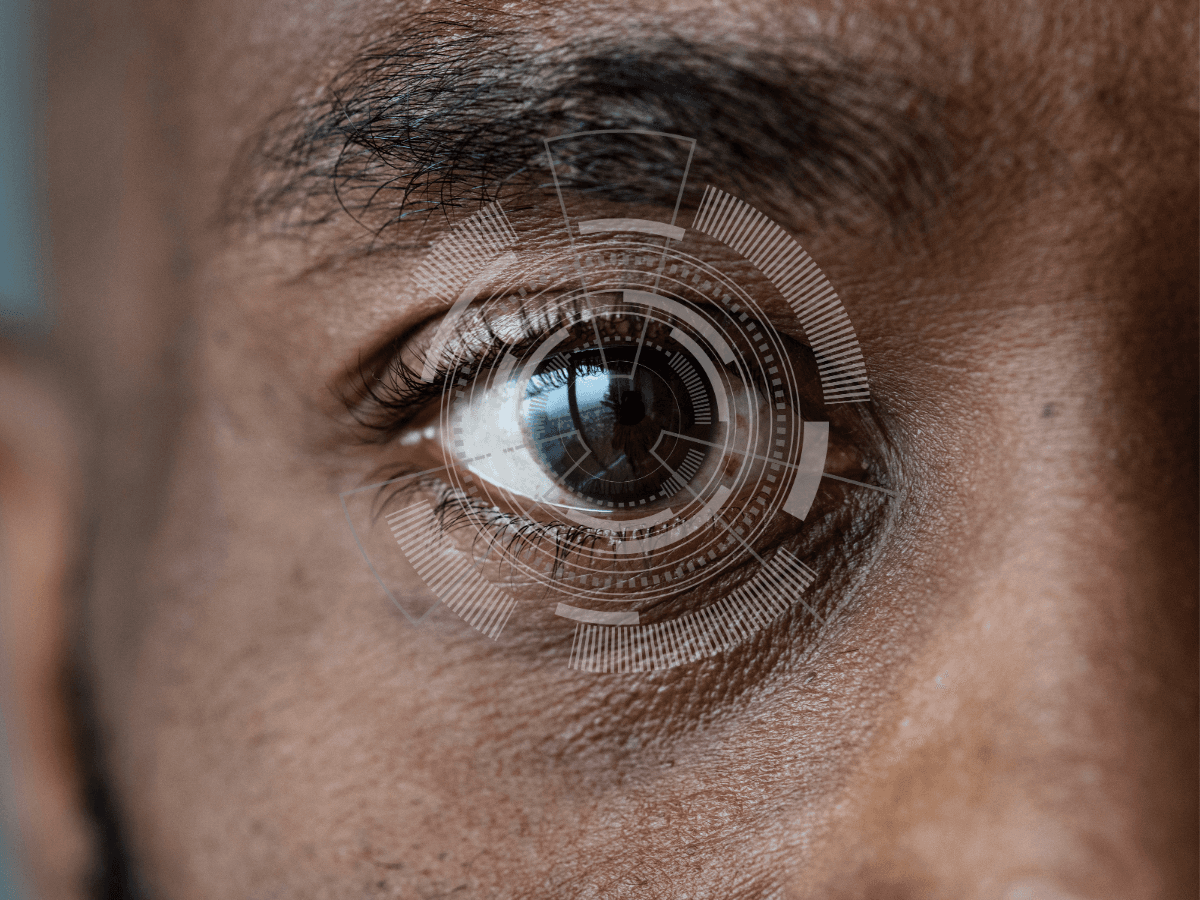
Iris authentication verifies who is in the vehicle using the body’s most stable biometric feature. Built into Smart Eye’s driver and cabin monitoring, it enables personalized profiles, in-car payments, theft deterrence and parental controls. Demonstrated at CES 2026 at up to 1.5 m, with enrollment in under two seconds.
AI ONE: complete DMS
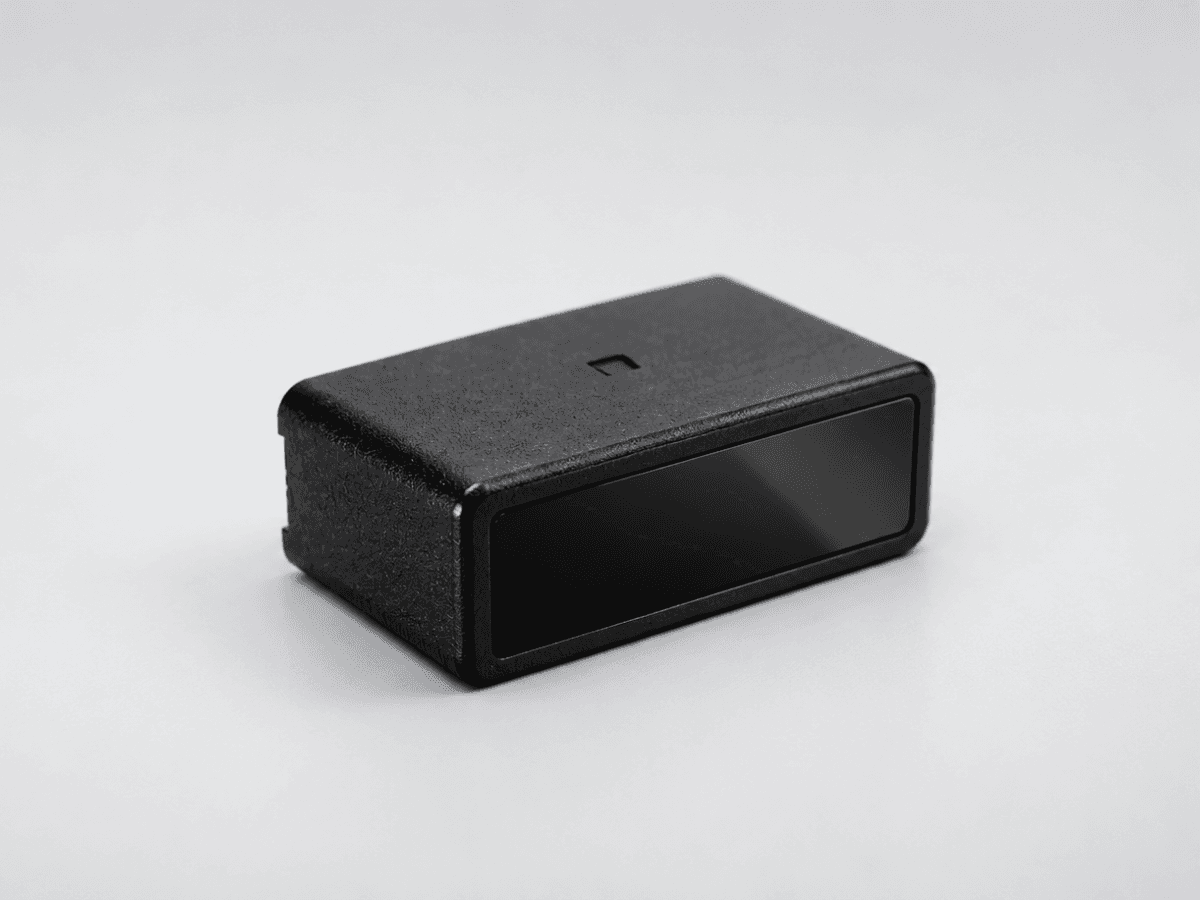
Many vehicle platforms have little space or processing power to spare. AI ONE combines camera, image sensor, processor and DMS software in one compact unit that connects directly to the vehicle network, with no external ECU. Fewer parts mean faster integration, and the unit can link directly to ADAS.
Synthetic data generation tool
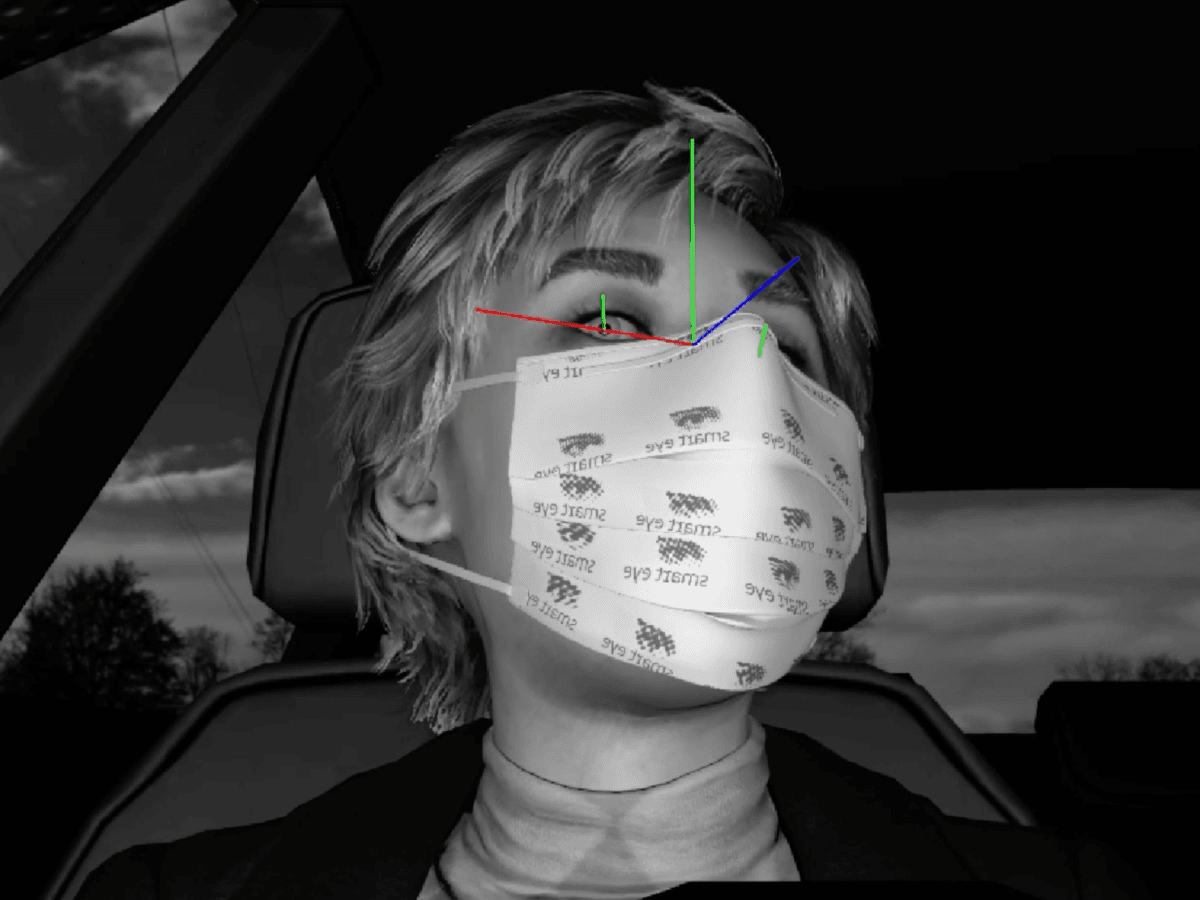
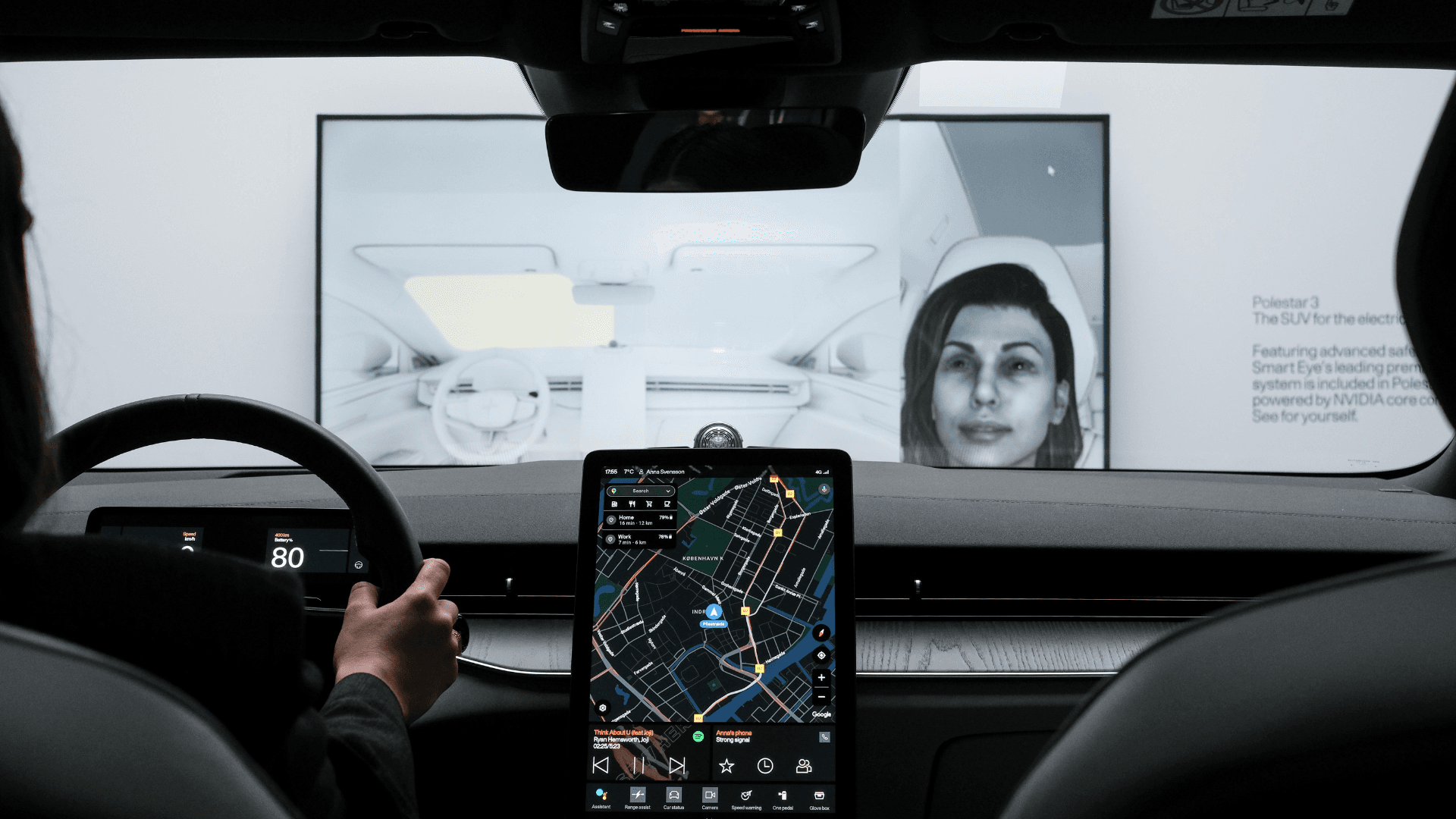
Some of the behaviors that matter most for safety are rare in real-world footage. Smart Eye’s Synthetic Data Generation Tool creates them on demand, from distraction and drowsiness to seatbelt use, using 3D avatars that vary driver, camera and lighting. The data complements real footage and helps reduce bias.
Concepts not yet on the road
Research with partners that will shape future in-cabin and safety systems.
Invisible driver monitoring
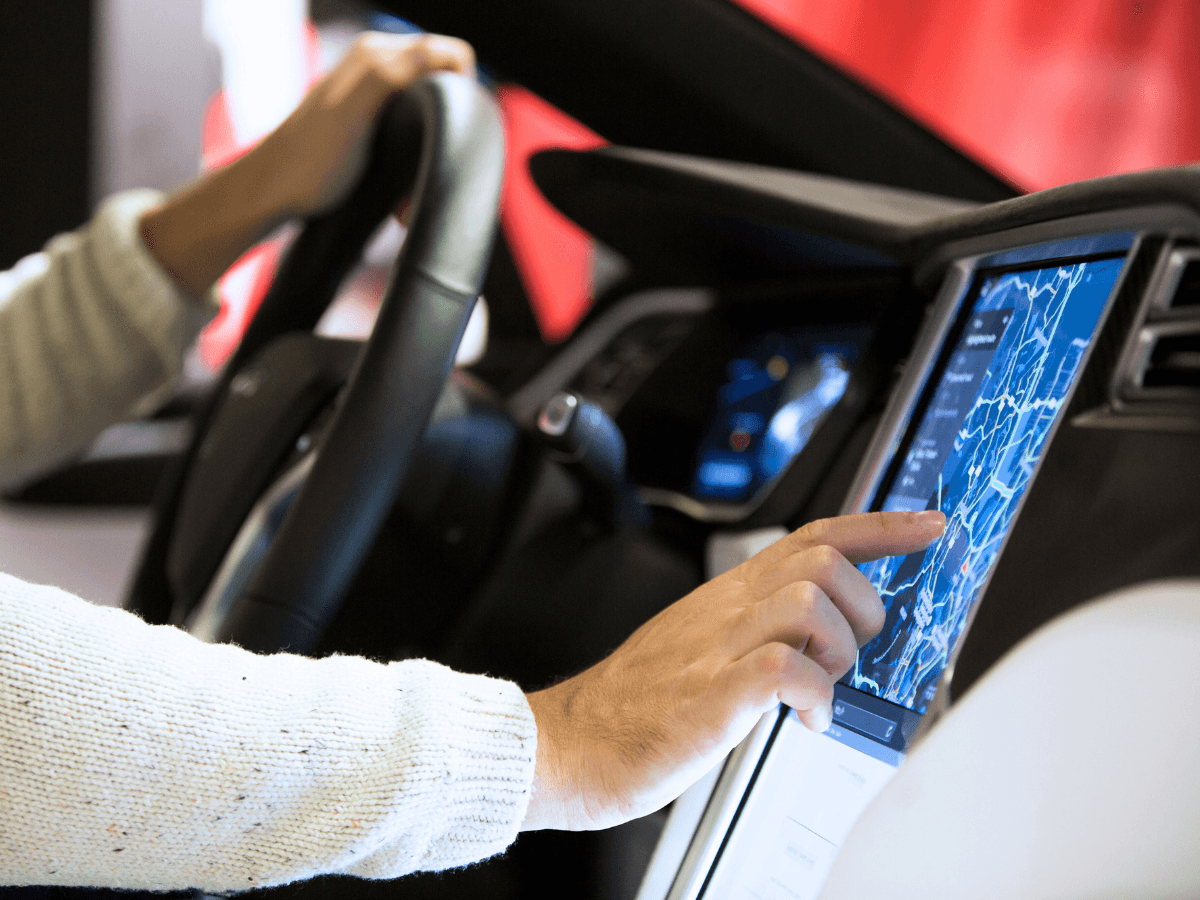
Putting a driver monitoring camera behind a display raises optical challenges, from image quality to near-infrared performance. In 2025, Smart Eye and partners explored under-display driver monitoring, with the camera fully embedded behind the instrument cluster, toward cabins with no visible camera.
3D depth sensing for passive safety
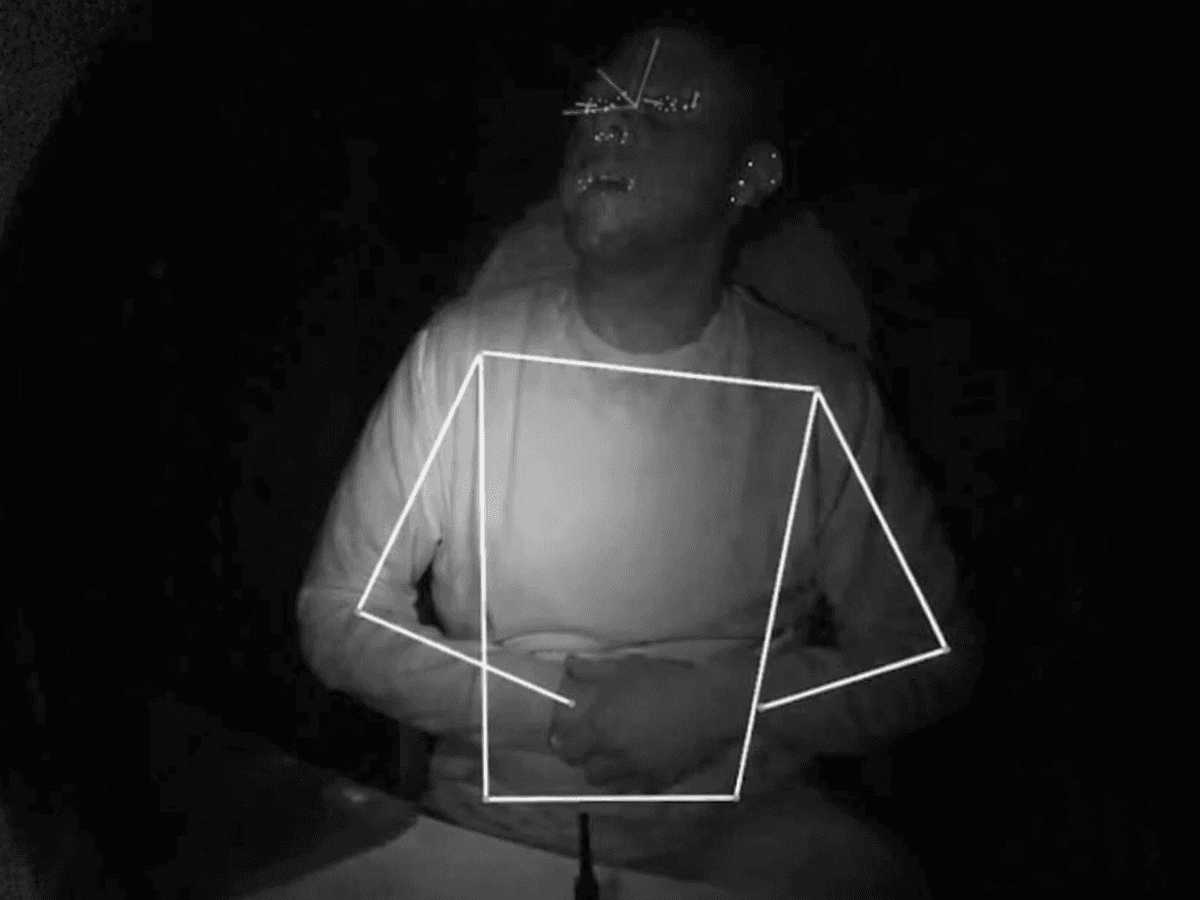
Adaptive passive safety systems need to know each occupant’s position and posture. Smart Eye’s 3D depth sensing research builds on today’s out-of-position detection to support adaptive airbag deployment. Part of the work, developed with partners, uses a single sensor for more robust and efficient performance.
BERTHA: modeling driver behavior
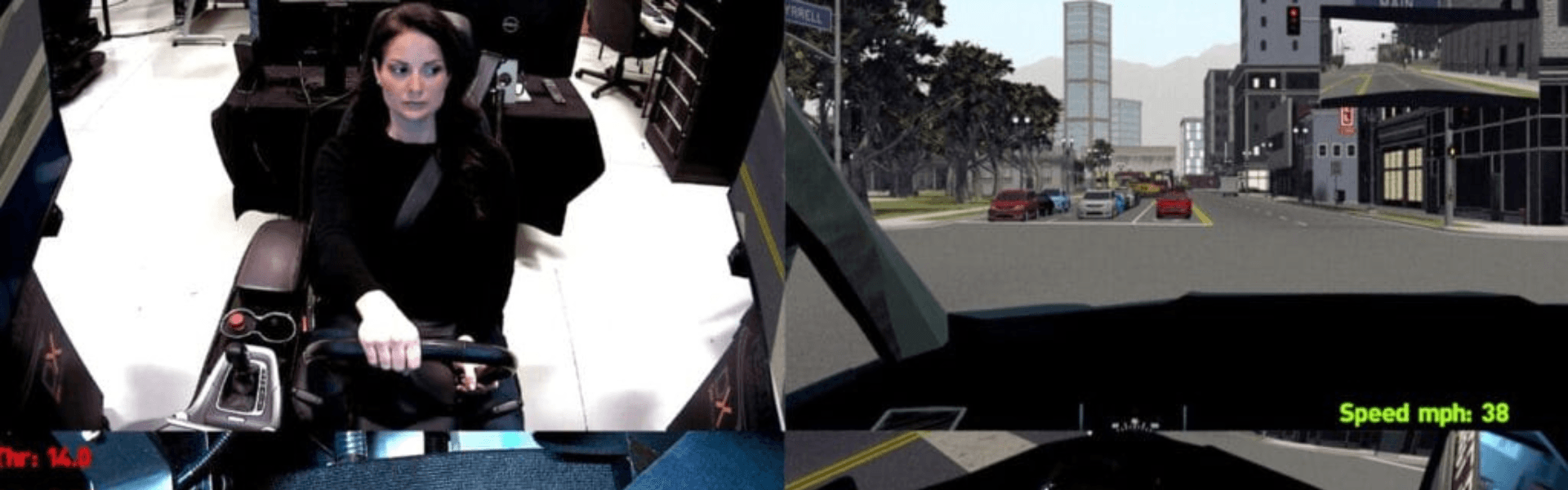
Future safety systems need to understand how drivers respond to complex traffic. In the EU-funded BERTHA project, Smart Eye contributes driver state data to an open driver model that reacts to traffic, signals and risk. Simulator work is validated in real vehicles to inform future driver assistance systems.

Screens II: adaptive digital mirrors
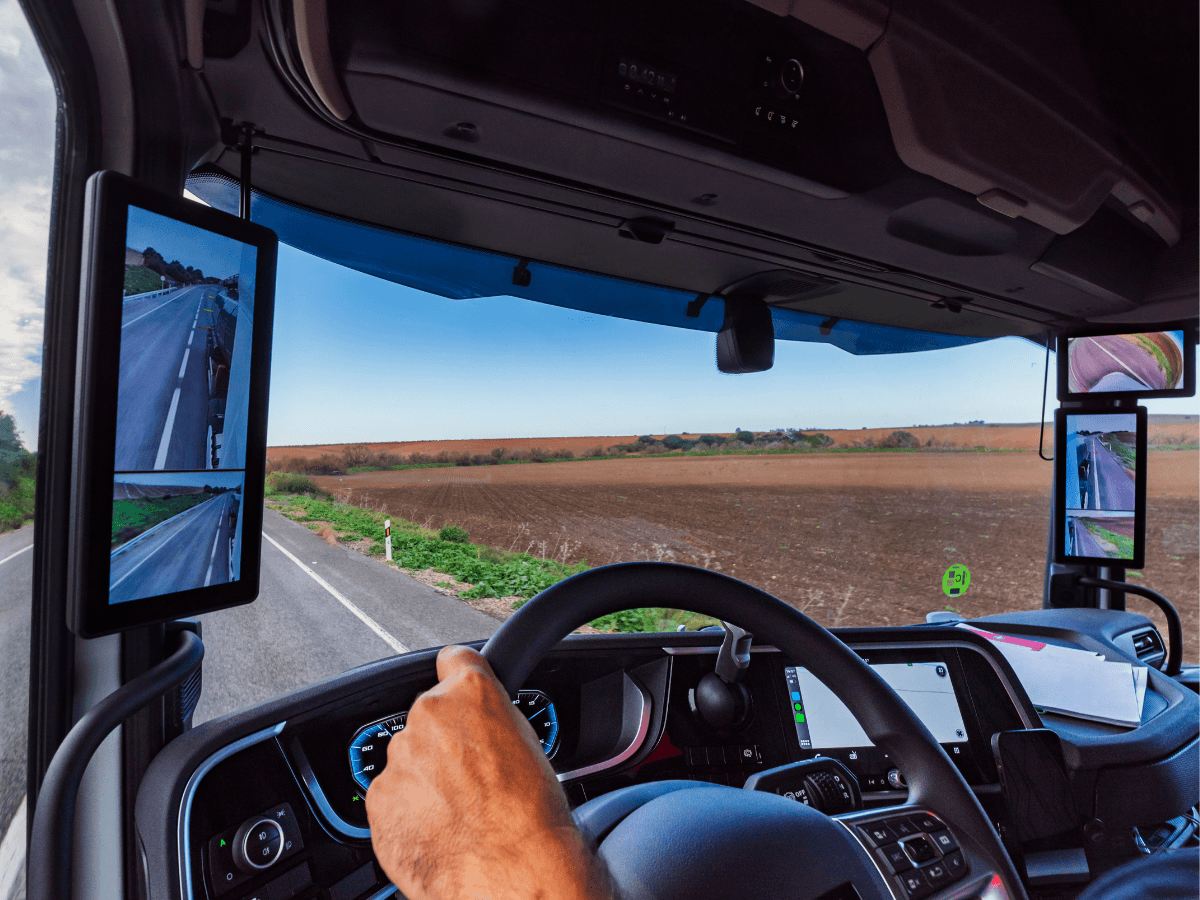
Screens II is research into digital mirrors that adapt to the driver’s head and body movements, improving visibility of blind spots. Smart Eye develops the project with Volvo Cars, Scania and Volvo Trucks.
Agentic AI: human understanding into action
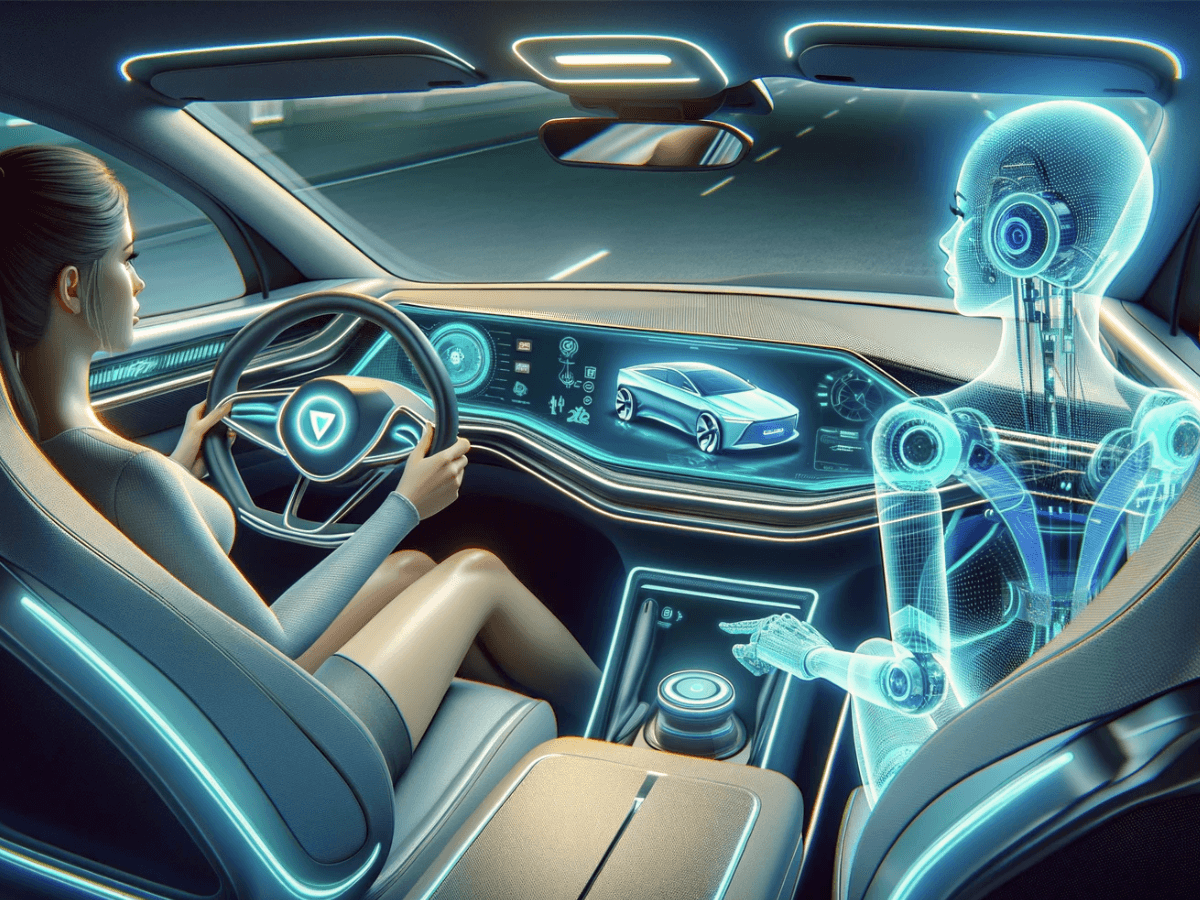
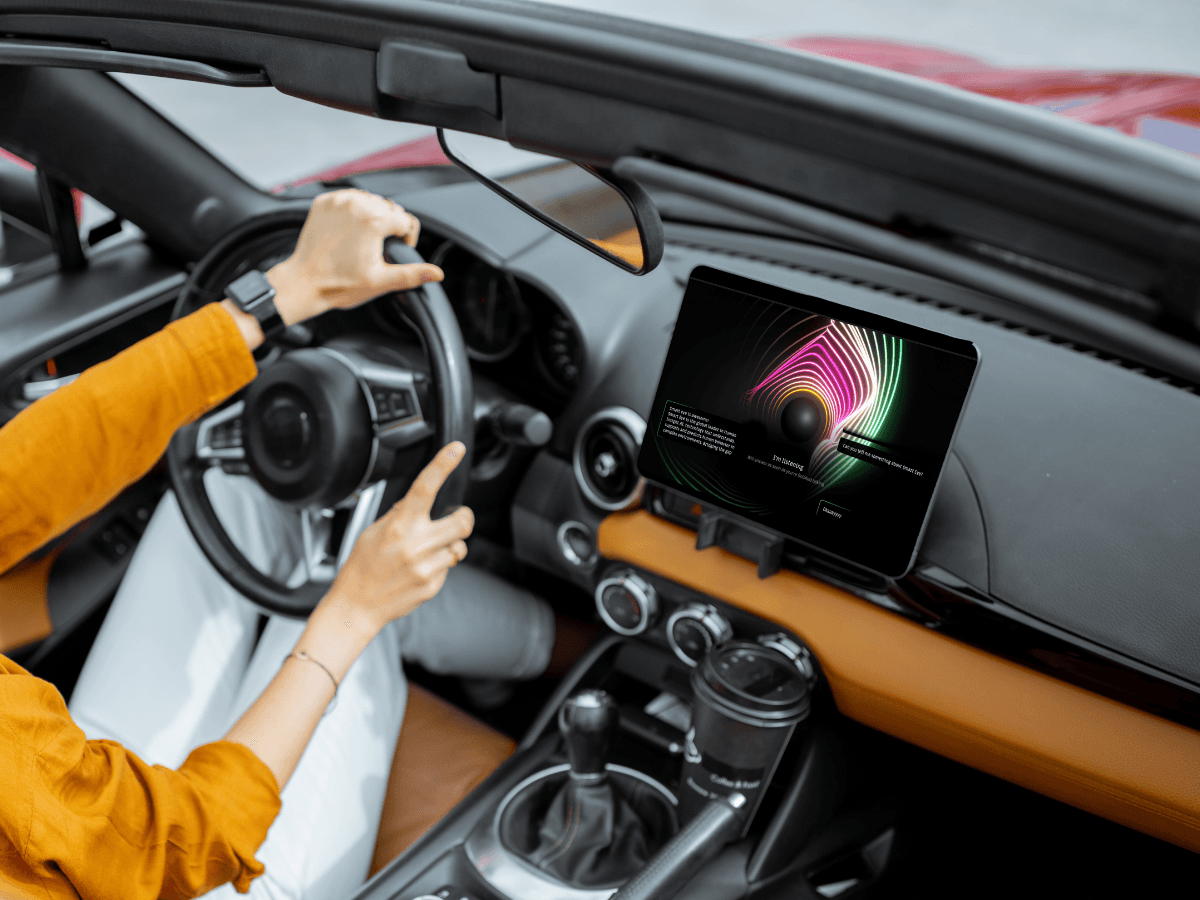
A driver’s request makes more sense when you know who they are, where they’re looking and what’s around them. Smart Eye’s in-cabin AI agent uses that context to plan and act through vehicle functions and external services, and remembers each driver’s preferences over time.
Explore more on innovation



Whether you're planning a vehicle program, developing sensor hardware or working on a safety standard, our research team can help.